
Guide
An LED light is more than its chip — driver, heatsink and optics
Two LED lights can use near-identical chips and still live in different worlds — one runs for a decade, the other flickers out within a year. The difference is everything around the chip. Inside every LED light there is a small team of parts: the chip that makes the light, the driver that feeds it steady current, the heatsink that carries its heat away, the optics that aim the beam, and the housing that holds it all together. This post opens the fitting up, part by part — what each one does, how each one fails, and why heat quietly decides which lights grow old gracefully and which die young. It ends with the checks you can actually make in a shop: weight, metal, a stated driver type, and a warranty that means something.
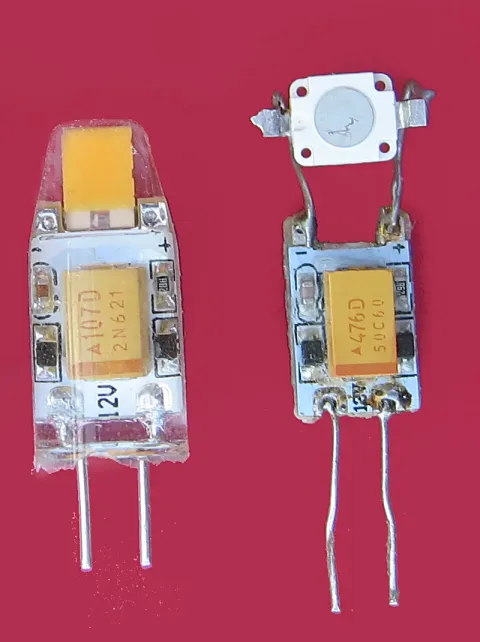
Buy two LED lights built around similar chips and you can get two very different lives. One is still going strong after years of evenings. The other starts flickering by its second monsoon and gives up entirely in year two — with its chips, if you opened it, probably still able to glow. The chip got the credit on the box. It was never the whole light.
An LED light is a system of parts that live or die together: the chips, the driver that powers them, the heatsink that cools them, the optics that shape the light, and the housing around it all. The US Department of Energy's lifetime guide for LED luminaires puts it plainly — a luminaire's reliability is the product of its parts multiplied together, and the parts around the chips can dominate how long the whole thing lasts. So let's meet the team.
The chip: famous, but not in charge
The chip is where light is born, and earlier posts in this series cover what it is and how its packages differ. Here it only needs its job description and its one bad habit. The job: turn a steady flow of direct current into light. The bad habit: it does not convert all of that electricity into light — the rest leaves as heat, generated in a spot smaller than a grain of rice.
That heat is the chip's problem and everyone else's assignment. Left sitting in its own heat, a chip loses brightness, its colour drifts, and its useful life shrinks. Everything else inside the light exists either to feed the chip properly or to rescue it from its own warmth. Which brings us to the part nobody photographs.
The driver: the part that usually dies first
Chips run on low-voltage direct current, delivered steady. Your wall socket offers none of that — it offers alternating current at mains voltage. The driver is the translator in between: a small circuit board, hidden in a bulb's base or in a fitting's body, that converts mains power into regulated DC and holds the current constant. Constant-voltage versions exist too, mostly feeding strips, but the principle is the same — the chip must never be left alone with raw mains power.
Drivers are also, often, where an LED light's life ends. The DOE's reliability research is blunt about it: driver electronics can matter as much as the chips themselves, driver failure is a likely cause when a light dies suddenly rather than fading, and inside the driver the component that usually gives out first is its electrolytic capacitor — a part that ages faster the hotter it runs. DOE stress testing of hundreds of products found the same pattern: when products failed, the failure was typically in the driver circuit, often at board level. That flickering light in your corridor? Flicker is the driver struggling, far more often than it is a dying chip. And an LED light that went dark overnight while its chips still look perfect has usually lost its driver, not its light source.
The heatsink: heat's way out
Heat leaves a chip along a chain, and every link matters. It starts at the chip itself, passes into the board the chip is soldered to — often a metal-core board whose aluminium base spreads the heat sideways — then into a heatsink or the metal body of the fitting, and finally off the outer surfaces into the room air. Chip, board, heatsink, air. Break any link — a board that insulates, a token sliver of metal, a plastic shell where a finned body should be — and the whole chain runs hot.
The stakes are steeper than most people expect. The DOE's thermal management fact sheet calls heat handling arguably the most important part of LED system design, and its experiment shows why: identical chips, run at the same current, with an 11 °C difference in operating temperature, came out with estimated useful lives of roughly 37,000 hours for the cooler chip against roughly 16,000 for the hotter one. One experiment, one pair of chips — but it shows the shape of the truth. Heat doesn't trim an LED light's life. It divides it.
The optics: the last thing the light touches
Light that leaves the chip still has to be aimed. That's the optics — the reflector that gathers it, the lens that focuses it, the diffuser that spreads and softens it. Together they decide the beam width, the evenness, and how much of the light ends up as glare in your eyes instead of light on your desk. Glare is not a matter of taste; lighting designers measure it. A bare, bright chip behind cheap clear plastic wastes light in every direction except the useful one.
Optics also age, in their own quiet way. Plastic lenses and covers yellow, cloud and even crack after years of heat and light exposure, and the beam suffers — patchier, dimmer, harsher — while the chips underneath may still be healthy. When an old fitting looks tired, sometimes it is the plastic, not the electronics, asking to retire.
Why enclosed fittings are the hard test
Put an LED light inside a sealed glass fitting or a tight closed shade and you've cut the last link of the thermal chain: the air can't carry the heat away, so the light sits and bakes in its own warmth. The chips run hotter, and so does the driver — and the driver, remember, is the part that ages fastest in heat. US ENERGY STAR guidance warns that an LED light in an enclosed fixture may have a shortened life, and advises choosing lights rated for enclosed fixtures when that's where they'll live. A fitting with room to breathe is the kindest home you can give any LED light.
Same chip, different light: reading the price gap
Now the shop-floor question answers itself. The chip is one line on the bill. Around it, a maker chooses how much metal to put in the heat path, how generously to rate the driver's components, what plastic to mould the optics from, and how carefully to assemble it all. Those choices are invisible in a product photo and decisive in year three. Two lights with similar chips differ in price because they are, in every way that decides lifespan, different lights.
You can't run tests in a shop, but you can read signals. Weight and metal: a light with a real aluminium body has something to carry heat with; a featherweight all-plastic one mostly has hope. A stated driver type: a maker who prints "constant current driver" on the box is at least designing out loud. An enclosed-fixture rating, if you need one. And warranty length — treat it as a rough honesty signal, not a guarantee: standing behind a light for five years gets expensive if the driver is built to fail in two, so a long warranty usually means the parts inside were chosen to survive it. None of these is proof. Together, they're a much better guide than the chip's name on the box — because the chip was never the whole light.
Sources: US Department of Energy — "LED Luminaire Lifetime: Recommendations for Testing and Reporting" (3rd ed., 2014) and "LED Luminaire Reliability: Impact of Color Shift" (2017); US DOE fact sheet "Thermal Management of White LEDs" (2007); US EPA / ENERGY STAR consumer guidance on LED lights and enclosed fixtures; CIBSE Journal CPD module on LED luminaire optical control.
Featured photo: "COB and SMD LEDs on buck converters" (cropped) by Hans Haase, via Wikimedia Commons — CC BY-SA 4.0.
Frequently asked questions
What are the main parts inside an LED light?
Five, usually: the LED chips that make the light, the driver board that converts mains power into steady DC current, the heatsink or metal body that carries heat away, the optics — lens, reflector, diffuser — that shape the light, and the housing and base that hold it together and connect it to your socket.
My LED light died suddenly but the chips look fine. What failed?
Most likely the driver. Sudden death — dark overnight, or flickering first — is the signature of driver electronics failing, and US DOE reliability research identifies driver failure as a common cause of abrupt failure, often before the chips themselves wear out. In most sealed bulbs the driver can't be replaced separately, so the whole light is replaced.
Why do LED lights get dimmer over the years instead of just dying?
That's the other failure family: gradual fading, called lumen depreciation. Heat accelerates it — a chip that runs hot loses brightness faster. The conventional end-of-life mark is L70, the point where output has fallen to 70% of what it was when new. Good heatsinking is what keeps that day far away.
Can I use an LED light inside a closed glass fitting?
Only if it's rated for enclosed fixtures. A sealed fitting traps heat around the light, the driver and chips run hotter, and life shortens — ENERGY STAR specifically advises using lamps approved for enclosed fixtures in them. If the box doesn't say it, assume it isn't.
Does a heavier LED light really mean a better one?
Usually, but not always. Weight in an LED light often means more aluminium in the body, and more metal means a better path for heat to escape — the single biggest factor in lifespan. It's a clue, not a certificate: judge it together with the driver type, the ratings on the box and the warranty length.